Treatment
Sleep Apnea Treatment
An oral appliance that holds the airway open at night, for people who cannot get on with a CPAP machine.
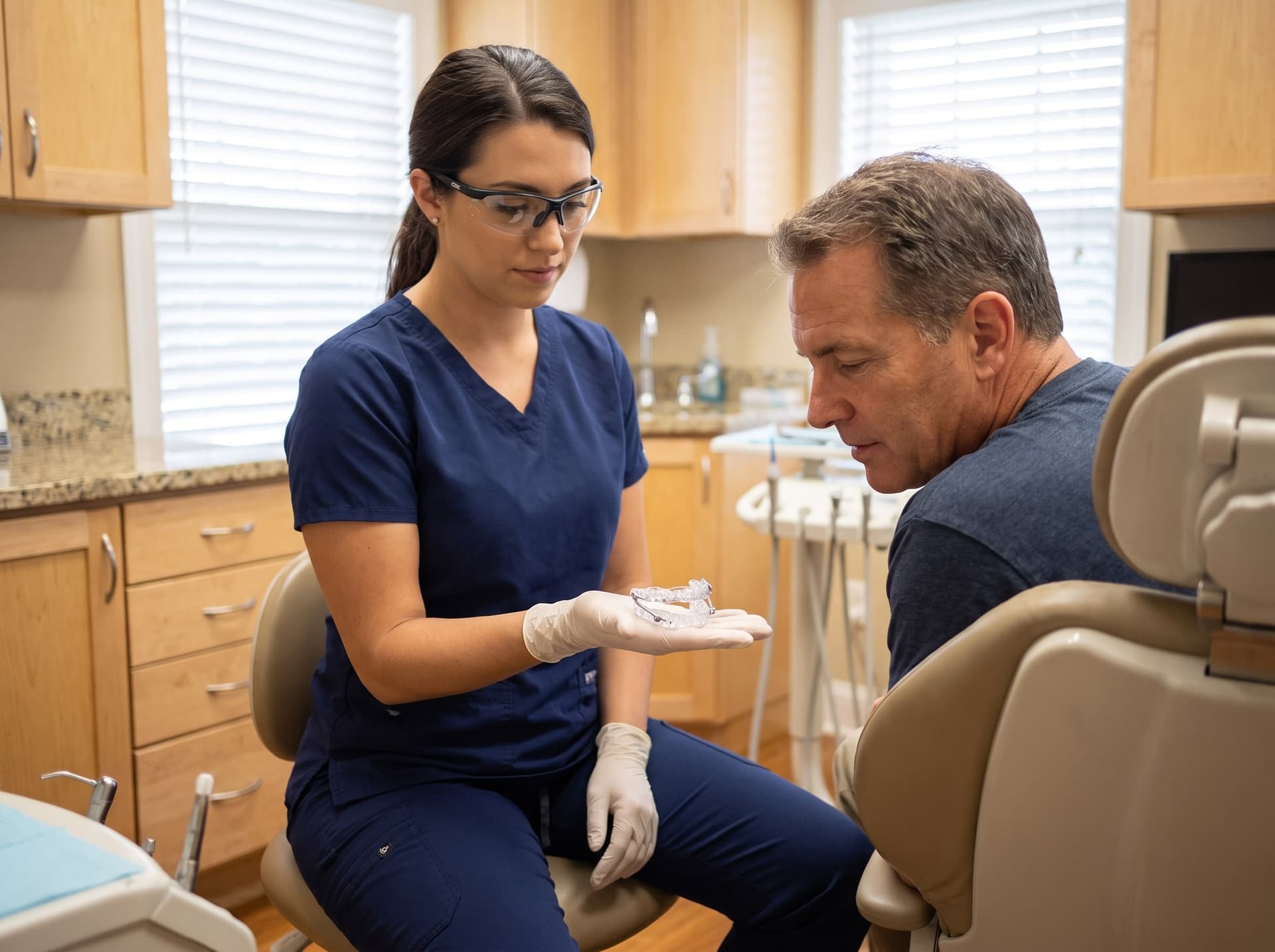
A custom appliance worn at night that holds your lower jaw and tongue slightly forward, keeping the airway open so it does not collapse while you sleep.
Diagnosis comes from a sleep study, which a physician orders and reads. If an oral appliance is appropriate, we scan your teeth, fit the appliance, and adjust it over several visits until it works.
Untreated sleep apnea is tied to high blood pressure, heart disease, and stroke, and an appliance you will actually wear beats a CPAP machine sitting in a closet.
FAQ
Frequently Asked Questions
Common questions about sleep apnea treatment.
People with diagnosed mild to moderate obstructive sleep apnea, and those with severe apnea who cannot tolerate CPAP. Snoring, morning headaches, and daytime exhaustion are the usual clues.
Bulky for the first week or two, then most people stop noticing it. Leah and Paula are trained to look at airway, so this often starts as something they spot at a cleaning.
A few weeks from scan to a fitted appliance, then several short visits to adjust the position. Getting it right is iterative rather than one and done.
We do not diagnose sleep apnea, a physician does, and we work from your sleep study. Medical plans sometimes cover appliances, but we do not accept medical insurance.
Jaw tightness and extra saliva in the mornings at first, both of which settle. Long-term wear can shift your bite slightly, so we check that at every visit.

Come and see us
We would love to meet you
Call the office or ask for a time online. We will come back to you within a business day, and tell you what it costs first.